

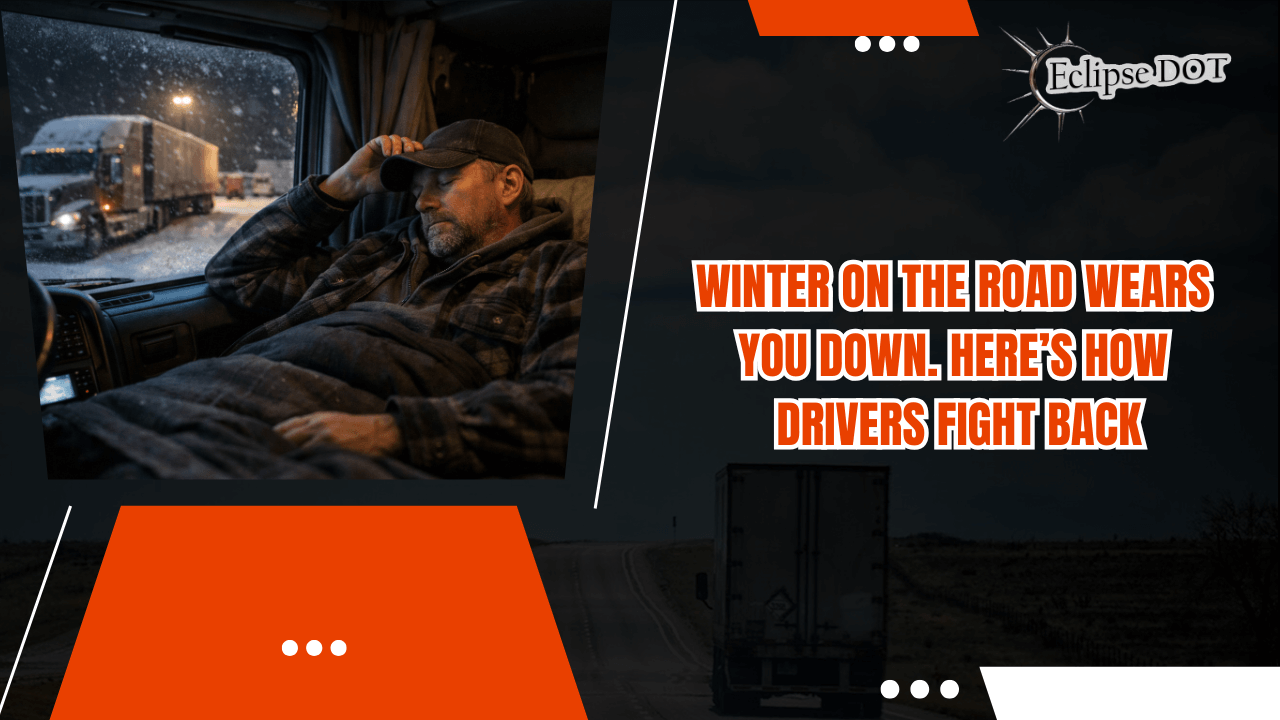
Winter has a way of doing damage quietly.
It doesn’t show up all at once. It creeps in through shorter days, darker mornings, and longer nights spent staring through a windshield that looks the same mile after mile. Add holiday traffic, end-of-year pressure, and weather that turns every decision into a calculation, and winter becomes more than a season. It becomes a grind.
For drivers who live on the road, that grind hits harder.
If winter leaves you feeling more tired, less patient, and mentally worn down, you’re not imagining it. Cold weather, limited sunlight, disrupted sleep, isolation, and stress all stack up. And when that happens, it doesn’t just affect how you feel. It affects how you drive, how you think, and how you make decisions.
At Eclipse DOT, we’ve seen this pattern play out again and again. Winter fatigue leads to missed details. Missed details lead to violations. Violations lead to audits, downtime, and headaches no one wants.
So let’s talk about how drivers fight back and why it matters more than ever during winter.
Winter Fatigue Is Real, and It’s Not a Character Flaw
There’s still a mindset in trucking that says you should just push through it. Tough it out. Keep rolling.
That mindset ignores reality.
Medical and safety experts have long acknowledged that reduced daylight, disrupted sleep cycles, and prolonged isolation can affect mood, focus, and energy. Seasonal patterns are real, and winter conditions amplify them for drivers who spend long hours alone and awake during the body’s natural low-energy periods.
That doesn’t mean drivers are weak. It means the environment is demanding.
The smart response isn’t denial. It’s preparation.
Movement Is the First Line of Defense
Cold weather makes it tempting to stay parked. The cab is warm. The wind is not. But the longer you stay still, the heavier winter fatigue becomes.
Movement is one of the fastest ways to reset your body and your brain.
You don’t need a gym. You don’t need a routine that feels like punishment. You just need to move.
Take a short walk during fuel stops. Stretch your legs, hips, shoulders, and back. Step outside and breathe fresh air instead of spending every break inside the cab.
Even small amounts of movement improve circulation, increase alertness, and lift mood. It breaks the mental fog that comes from sitting too long in one place.
Because winter steals daylight, many drivers notice their energy dipping earlier in the day. Some use bright light therapy lamps in the cab to help offset the lack of sunlight. It’s not a miracle fix, but it can help regulate energy and mood when winter days feel endless.
The goal is simple. Don’t let winter turn your cab into a cave.
Connection Keeps Isolation From Winning
Isolation is part of the job. Winter just makes it louder.
When daylight disappears early and everyone back home is wrapped up in their own schedules, the road can feel extra quiet. That silence has a way of creeping into your head.
Staying connected takes intention.
Schedule regular calls or video chats with family and friends, even if they’re short. Hearing a familiar voice can ground you faster than scrolling ever will.
If family isn’t available, connection can still happen out here.
Sit down inside the truck stop instead of eating alone in the cab. Strike up a conversation with another driver. Hop on the CB and talk shop. Join an online trucking community and engage instead of just reading.
You don’t need deep conversations. Sometimes a few minutes of human interaction is enough to reset your mindset and pull you out of your head.
Fuel Your Body Like It Has a Job to Do
Winter driving demands more energy, but convenience food delivers less.
It’s easy to rely on whatever is quick, hot, and close. Over time, that catches up with you. Energy crashes. Brain fog. Short tempers. All of it feels worse in cold weather.
The goal isn’t perfect nutrition. It’s better fuel.
Keep healthier snacks in the cab so bad choices aren’t the only choices. Drink more water than you think you need. Dehydration hides behind fatigue more often than people realize.
Hot meals matter too. Cooking in the cab, reheating meals from home, or stopping at a favorite roadside restaurant can provide comfort and real nourishment at the same time.
What you eat affects alertness, reaction time, and patience. In winter conditions, that connection matters more than most drivers realize.
Sleep Is a Safety Tool, Not a Luxury
Fatigue doesn’t wave a red flag. It shows up quietly as slower reactions, missed signs, and poor judgment.
Winter makes quality sleep harder to maintain, which makes protecting rest even more important.
Keeping a consistent sleep schedule helps your body know when to shut down. Making your cab a comfortable place for real rest matters too.
Small changes add up. A mattress topper. Blackout curtains. The right blanket. Reducing screen time before bed so your brain can power down instead of staying wired.
Regulators have been clear about this for years. Fatigue impairs response time and increases crash risk, especially during overnight and early afternoon hours when the body naturally wants rest.
Sleep isn’t about comfort. It’s about safety.
Holiday Pressure Doesn’t Have to Run the Show
The holidays bring extra stress no matter where you are. On the road, that pressure multiplies.
Money. Gifts. Expectations. Time. It all stacks up fast.
Keeping it simple helps more than people think.
Set a realistic budget and stick to it. Choose thoughtful gifts over expensive ones. Pick up something unique from the places you travel. Use online shopping to save time and energy.
The people who care about you want you safe and steady more than they want another package under the tree.
Give Your Mind Something Better to Do
Winter downtime can work for you or against you.
When your mind has nothing to focus on, it will focus on everything that feels heavy. Engagement changes that.
Music playlists, podcasts, audiobooks, learning something new, journaling, photography, and small creative projects all help keep your brain active in a positive way.
Some drivers even turn hobbies into gifts, which gives winter downtime a purpose.
The activity itself doesn’t matter nearly as much as the engagement. When your mind is occupied with something constructive, winter loses leverage.
Why Mental Readiness Matters More in Winter
Winter driving isn’t just uncomfortable. It’s dangerous.
Snow, sleet, and icy pavement contribute to thousands of crashes every year. Reduced visibility and longer stopping distances already raise the stakes. Add fatigue, stress, and distraction, and the margin for error shrinks fast.
Mental sharpness matters just as much as mechanical readiness. When winter stress creeps in, it doesn’t stay personal. It becomes a safety issue and often a compliance issue.
That’s where fleets and drivers get caught off guard.
Winter Is Hard. Taking Care of the Driver Is How You Win.
Preparing your truck matters. Planning your route matters. Watching the forecast matters.
But none of it works if the driver behind the wheel is worn down.
At Eclipse DOT, we’ve seen winter stress turn into violations, incidents, and audits that could have been avoided with better habits and better support. Taking care of yourself isn’t soft. It’s professional.
Clear heads make better decisions. Better decisions lead to safer miles.
Winter may wear you down, but it doesn’t have to win.
Gain exclusive access to our CDL & DOT Compliance articles with a trial at DOTDocs.com. And don’t forget to claim your FREE micro audit at THE ECLIPSE DOT MICRO AUDIT. Ready for seamless operations? Discover the difference today!
Sources
• National Institute of Mental Health – Seasonal Affective Disorder
• Mayo Clinic – Seasonal affective disorder and light therapy
• Federal Motor Carrier Safety Administration – Driver Fatigue
• Federal Motor Carrier Safety Administration – Sleep disorders and CMV safety
• National Highway Traffic Safety Administration – Winter driving crash data
• Federal Highway Administration – Snow and ice crash statistics