

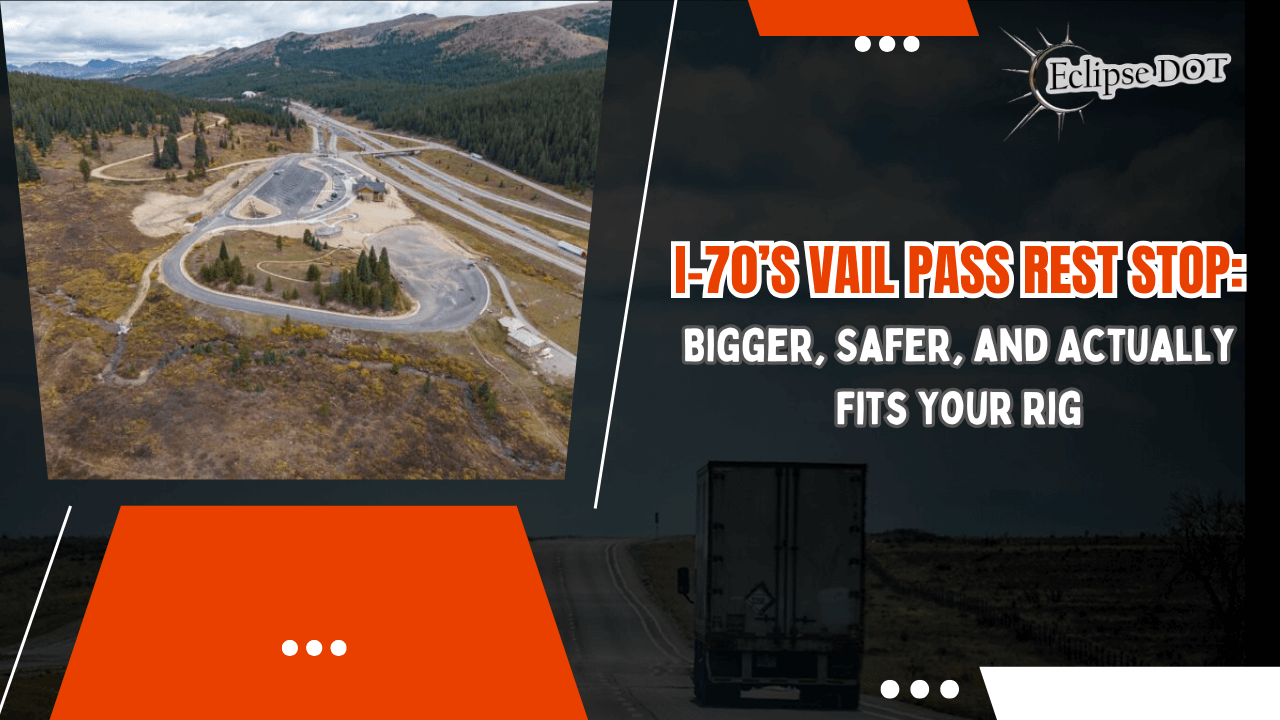
Photo courtesy of CDOT
If you’ve ever climbed Colorado’s I-70 through Vail Pass, you know it’s not for the faint of heart. It’s one of those routes that’ll test your rig, your brakes, and maybe your prayer life. But here’s some good news—Colorado just made one of its most notorious stretches a little more driver-friendly.
After a full rebuild, the Vail Pass Rest Area has officially reopened—and it’s no ordinary pit stop. It’s bigger, safer, and finally designed with truckers in mind.
A High-Altitude Overhaul Worth the Wait
The Colorado Department of Transportation (CDOT) recently cut the ribbon on the reconstructed rest area, sitting at more than 10,000 feet above sea level in the heart of the I-70 Mountain Corridor. The project kicked off in May 2023 and wrapped up this fall, despite the kind of challenges only mountain construction can throw at you—short seasons, unpredictable weather, and thin air that’ll humble even seasoned crews.
So, what’s new?
-
Expanded truck parking, which means fewer rigs parked dangerously along ramps or shoulders.
-
Clearer separation between vehicles and pedestrians—no more dodging tourists and dogs on leashes when you just want to grab a bathroom break.
-
Safer pull-offs for fatigued drivers who need a quick rest before heading back into those winding grades.
-
ADA-accessible restrooms and walkways, so every traveler can stretch their legs in safety.
-
On-site staging for CDOT crews, which improves response times during snowstorms and highway incidents.
It’s more than a facelift—it’s a functional upgrade built for real-world use.
“More Than a Road—A Gateway”
CDOT Executive Director Shoshana Lew summed it up perfectly:
“Vail Pass is more than just a road—it’s a gateway to our mountain communities, our tourism economy, and the Colorado lifestyle. This new rest area makes travel safer and more welcoming for everyone who comes through our state, from truckers to families on vacation.”
And that’s the truth. Vail Pass isn’t just a scenic stretch—it’s a vital artery that keeps commerce, tourism, and local communities moving.
Every day, thousands of vehicles tackle that climb. When winter hits, it becomes a battleground of snow, ice, and spinning tires. That’s why CDOT knew this project had to do more than offer clean restrooms—it had to support safety and operational readiness.
Building at 10,000 Feet: Not Your Average Construction Zone
According to Shawn Smith, CDOT’s Director of Maintenance and Operations, the new rest area “isn’t just about convenience—it directly supports safety by giving motorists a place to pause and by providing increased capacity for maintenance equipment storage.”
Translation: this rest stop isn’t just a comfort zone—it’s a strategic outpost. During blizzards, CDOT teams can now deploy snowplows and maintenance crews faster, keeping I-70 open and safe for drivers.
And let’s not forget the conditions. Building at 10,000 feet isn’t like dropping asphalt in downtown Denver. You’re dealing with thin oxygen, freezing temperatures, and a construction window that’s barely long enough to sneeze. Yet, CDOT crews and contractor Taylor Kohrs managed to pull it off—on time and on point.
“Whether you’re a truck driver, a family on a road trip, or someone heading onto the trails, this rest area is built to improve your experience,” said Hope Wright, CDOT’s Real Estate Asset Manager.
Why This Matters for Truckers
Now, let’s talk about the folks who will feel this change the most—truckers.
You don’t need a DOT inspection to know how bad the parking situation has been in the mountains. When the old rest area closed in 2023, it added strain to an already tight parking network. Drivers were forced to park on ramps or push through exhaustion just to find a safe pull-off—both dangerous and avoidable.
This new design changes that. Expanded truck parking means more rigs can park legally and safely, without playing a game of shoulder roulette. It’s a big deal, especially in a corridor where a single mistake can snowball into major accidents or shutdowns.
And yes, it’s actually big enough to fit your rig—no more shoehorning a 53-footer into a space meant for a Subaru.
A Rest Area with Brains and Heart
This isn’t your average government project. The new Vail Pass Rest Area was designed with sustainability and long-term efficiency in mind.
Some of its features include:
-
Energy-efficient lighting and building systems to cut down on operating costs
-
Durable materials chosen to withstand the extreme mountain climate
-
Smart layout planning, keeping traffic flow smooth even during busy weekends
That means less money spent on repairs, more uptime for travelers, and fewer disruptions for truckers.
Why It Matters Beyond the Mountains
If you haul freight across Colorado—or even pass through on your way west—this rest area represents something bigger than a parking upgrade. It’s a shift in mindset.
It shows what happens when states actually listen to the people using their roads. Truckers have been saying it for years: “We don’t need fancy, we need functional.” CDOT got that message.
And by investing in infrastructure that helps drivers rest safely, Colorado is also improving overall highway safety and efficiency. Fatigue-related crashes drop when drivers have reliable places to park. That means fewer pileups, fewer shutdowns, and less strain on local enforcement and emergency crews.
It’s a win for everyone—drivers, fleets, and the communities along the corridor.
Rest Stops Are a Reflection of Respect
Let’s be honest: the condition of a state’s rest areas says a lot about how it values its drivers. When a trucker can’t find a safe spot to rest, it’s not just inconvenient—it’s dangerous.
Vail Pass is a reminder that driver well-being is public safety. When you give professionals the space to stop, rest, and reset, everyone benefits.
And sure, it might sound like “just a rest area,” but anyone who’s ever battled Vail Pass in a snowstorm knows it’s far from that. This rebuild is a nod of respect—to the people who keep the economy moving mile after mile.
A Lesson in Leadership (and Listening)
Eclipse-DOT has said it time and again: Leadership in transportation isn’t about barking orders—it’s about building systems that work.
What Colorado did here is leadership in action. They identified a safety issue, collaborated with the people who live it every day, and built a solution that makes sense.
The takeaway? Every company, every fleet, every DOT team can learn from this. Safety isn’t about fancy slogans—it’s about solving real problems before they become headlines.
The Road Ahead
Vail Pass Rest Area may just be one stop along I-70, but it represents a growing movement in transportation—designing for the people behind the wheel.
As more states look to modernize rest stops and expand truck parking, this project sets a new standard. It’s practical, it’s safe, and it respects the realities of life on the road.
So next time you’re climbing I-70 and the mountains start to look endless, remember this: there’s finally a spot up there that’s ready for you—and it actually fits your rig.
Gain exclusive access to our CDL & DOT Compliance articles with a trial at DOTDocs.com. And don’t forget to claim your FREE micro audit at THE ECLIPSE DOT MICRO AUDIT. Ready for seamless operations? Discover the difference today!