

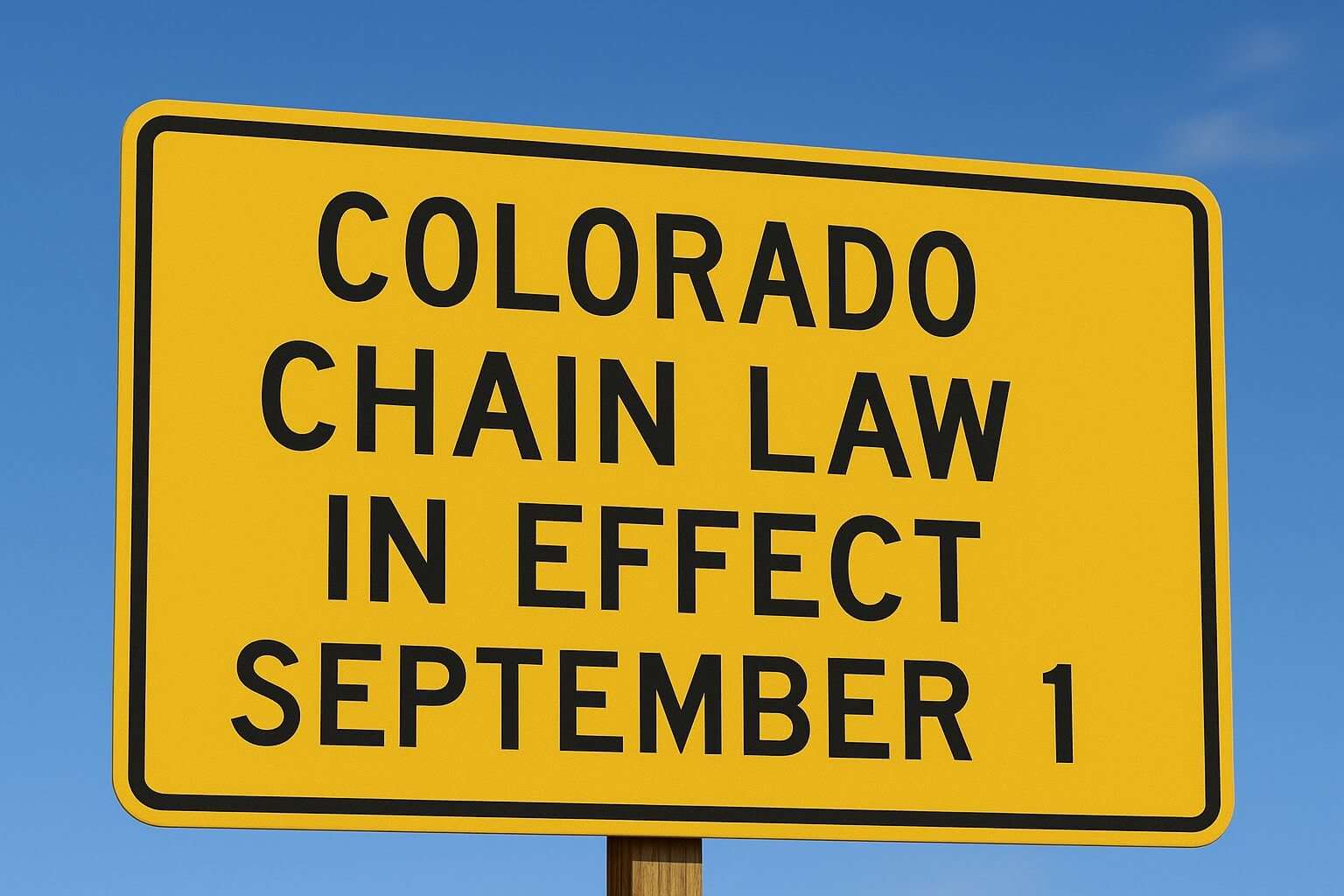
If you think Colorado’s mountains are just pretty backdrops for selfies, think again. They’re gorgeous, yes, but they’re also relentless. And if you’re driving a commercial vehicle out here, they’re unforgiving. Every year, like clockwork, Colorado reminds us that Mother Nature owns the roads. Starting September 1 and running all the way through May 31, the state flips the switch on its commercial vehicle chain law—and whether you like it or not, you’re in the game.
This is not about being overly cautious or “making truckers’ lives harder.” It’s about safety, commerce, and not shutting down an entire interstate because one unprepared driver tried to muscle through a mountain pass. The Colorado State Patrol (CSP) has made it clear: they’re watching, they’re ready, and the fine print isn’t so fine anymore—it’s bold, it’s clear, and it’s expensive if you ignore it.
What Exactly Is the Chain Law?
At its core, the chain law is simple: if you’re driving a commercial vehicle that weighs more than 16,000 pounds, or you’re carrying 16 or more passengers, you must carry—and when conditions demand, install—chains or approved traction devices on specific mountain corridors.
Why? Because high-altitude weather is unpredictable. One minute you’re cruising along in sunshine; the next, you’re in a whiteout with roads slicker than a hockey rink. Chains keep your tires biting into the pavement instead of skating across it. They keep traffic moving and drivers alive.
Where Do You Need Chains?
There’s no guessing game here. Colorado names names. These are the roadways where chains are mandatory during chain season:
-
I-70 west of Morrison (milepost 259) to the Utah border
-
Colorado Highway 9 Frisco to Fairplay (mileposts 63–97)
-
Route 40 Empire to Utah border (milepost 256 on)
-
U.S. 50 Salida to Utah border (milepost 225 on)
-
U.S. 160 Walsenburg to New Mexico border (milepost 304 on)
-
U.S. 285 Morrison to New Mexico border (milepost 250 on)
-
All of U.S. 550
If you’re on these stretches, don’t gamble. The mountain doesn’t care if your dispatcher is in a hurry or if “it looked clear when I left.”
What Happens If You Don’t Comply?
Let’s talk about pain—wallet pain. For years, drivers tossed around vague numbers like “$500+” fines. That’s history. CSP has updated its fine structure, and it’s clear:
-
$133 for not carrying chains
-
$579 for failing to chain up when required
-
$1,157 for blocking traffic because you ignored the law
Think those numbers are steep? Try blocking Vail Pass. The town of Vail raised the stakes:
-
$1,500 if you’re caught without chains
-
$2,650 if your unchained rig shuts down the pass
That’s not a typo. Two thousand, six hundred and fifty dollars. Hours after Vail passed that ordinance, a truck jackknifed and shut down eastbound I-70. You think they were happy about it? Not a chance.
The Enforcement Picture
Some drivers think chain checks are rare. Wrong. CSP is stepping it up. Last season:
-
They ran 13 weekly enforcement surges on I-70.
-
1,836 trucks were stopped.
-
109 didn’t have chains—about 6%.
-
At the Dumont port of entry, 1,382 drivers were cited for failure to carry chains—a 30% jump from the year before.
Those numbers aren’t suggestions. They’re proof that the state is serious.
What Gear Is Required?
If you’re in the game, be ready to chain four drive tires unless noted otherwise:
-
Straight Trucks: 4 tire chains, 4 AutoSocks, 4 cables (0.415”+), auto chains, or sanders
-
Single Drive Axle Combinations: 4 chains, 4 AutoSocks, auto chains, or sanders (no cables allowed)
-
Tandem Drive Axles: 4 chains, 4 AutoSocks, 4 cables (0.415”+), auto chains, or sanders (mix options apply)
-
Auto Transporters: Same list, but avoid damaging hydraulic lines; use approved ATDs if necessary
Vehicles that only need to chain two drive tires:
-
Buses: 2 chains, 2 cables (0.415”+), 2 AutoSocks, auto chains, or sanders
-
Hot Shot/Pickups pulling trailers: 2 chains on rear tires; duallies require 4
Why the Fuss?
Because a single unchained truck can—and often does—cause a chain reaction of delays, crashes, and closures. Picture this: you’re eastbound on I-70, approaching a steep climb. Snow starts falling. One truck loses traction, stalls, or worse—slides sideways. Traffic stops. Freight stalls. And every minute costs companies thousands.
Colorado DOT and CSP know this. They’ve seen stranded trucks, lost loads, angry drivers, and even serious injuries—all preventable. That’s why they push education, signage, and enforcement. The goal isn’t to make your life miserable. It’s to keep the freight moving and the roads safe.
CSP and Local Ordinances Mean Business
Colorado’s chain law isn’t just state-level. Some communities, like Vail, crank the dial to eleven. Why? Because their local conditions are brutal and their roads can’t handle a stalled semi on a steep grade. The Vail fines alone tell you everything: if you come unprepared, they’re ready to make it hurt.
How to Stay Compliant
-
Carry the gear: Don’t assume “I’ll pick some up later.” Stock your truck before September 1.
-
Know your routes: If you’re covering the roads listed above, you’re in chain country.
-
Train your drivers: Chaining wrong can get you cited. Worse, it can fail.
-
Audit your fleet: One missing chain can equal one big citation.
At Eclipse DOT, we train fleets to avoid these exact pain points. From proper chain selection to hands-on training and compliance audits, we make sure your drivers know what to do and when to do it.
The Bigger Picture
Chain laws are part of a larger safety puzzle. Good tires, smart routing, weather monitoring, and proper driver education all feed into one thing: keeping commerce alive while keeping people safe. And remember, the chain law isn’t just about preventing accidents; it’s about preventing closures. When I-70 closes, supply chains choke. Companies lose money. Drivers lose time. And nobody’s happy.
Final Word
The Rockies don’t care about your deadlines. The CSP doesn’t care about your excuses. And fines this season are no joke. From $133 for forgetting to carry, to $2,650 for shutting down a pass, the message is clear: be prepared, or be prepared to pay.
September 1 is here. Your move: are you rolling prepared—or rolling the dice?
Gain exclusive access to our CDL & DOT Compliance articles with a trial at DOTDocs.com. And don’t forget to claim your FREE micro audit at THE ECLIPSE DOT MICRO AUDIT. Ready for seamless operations? Discover the difference today!
Sources: