

A Sudden Speed Bump on the Road
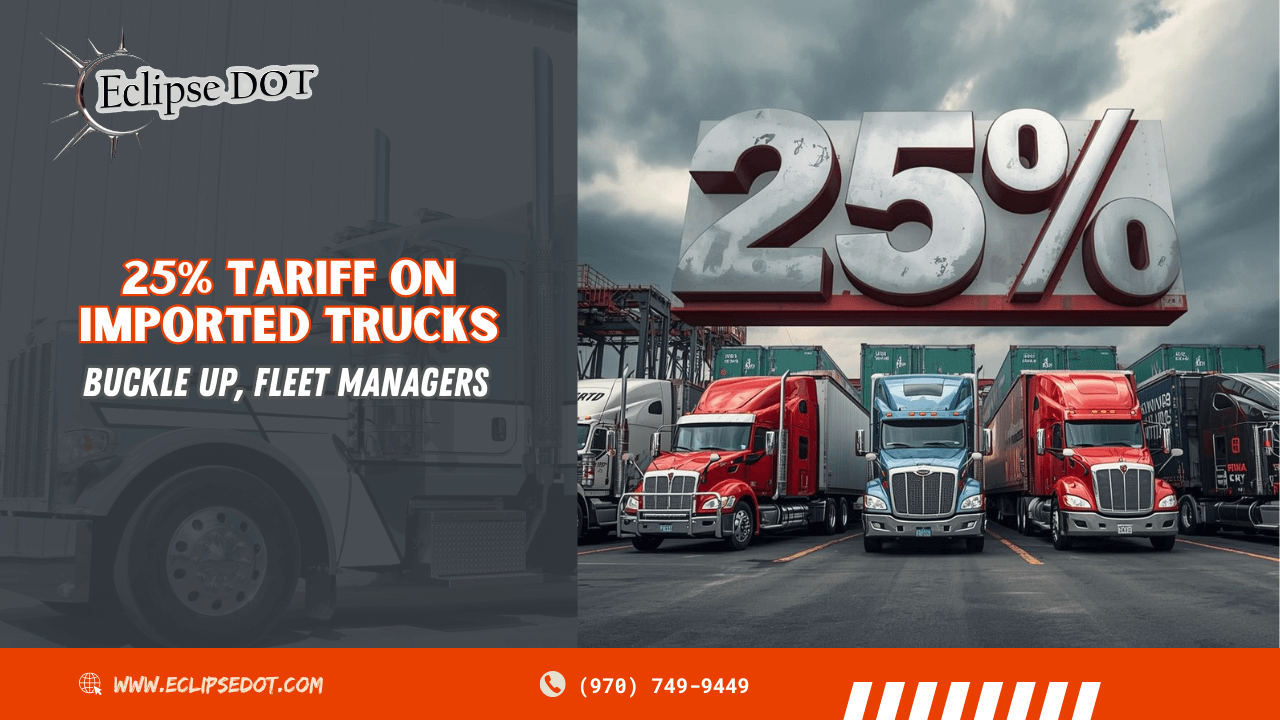
Last Thursday, President Donald Trump hit the trucking industry with some news that will make fleet managers spit out their coffee: effective October 1, 2025, all imported heavy-duty trucks will face a 25% tariff.
The announcement came via Truth Social, in a post that could easily have been titled, “Protecting America’s Truckers, One Tariff at a Time.” Trump explained it’s all about safeguarding “Great Heavy Truck Manufacturers” like Peterbilt, Kenworth, Freightliner, Mack Trucks, and others from “unfair outside competition.” He even threw in a curveball about national security, because apparently healthy truckers are vital to defending the nation.
For fleets, this isn’t just political theater—it’s a financial earthquake coming straight at your budget.
The Players: Who’s Really Affected?
Here’s where the story gets tricky: not all “imported trucks” are created equal. Many of the brands Americans associate with domestic manufacturing actually have global operations.
-
International Motors: Powertrains built in Huntsville, Alabama; trucks assembled in Escobedo, Mexico; San Antonio, Texas; and Springfield, Ohio.
-
Volvo: Trucks assembled in Dublin, Virginia; powertrains in Hagerstown, Maryland; and a new plant under construction in Monterrey, Mexico.
Thanks to the US-Mexico-Canada Agreement (USMCA), trucks assembled in Mexico or Canada can enter the U.S. tariff-free if at least two-thirds of the parts are North American-made. But here’s the kicker: it’s still unclear if Trump’s new 25% tariff will respect these exemptions or if some trucks will still feel the sting.
For fleet managers, that’s uncertainty with a capital “U.”
Why Fleet Budgets Are About to Feel the Pain
Tariffs aren’t just a line on a trade agreement—they hit where it hurts most: your wallet. Here’s how this 25% tariff could ripple through your fleet:
-
Higher Equipment Costs: Imported trucks are no longer cheap options. That 25%? It’s added straight to your purchase order.
-
Supply Chain Snafus: Some parts may get delayed or rerouted due to new import rules. Fleets could face longer lead times for trucks and replacement components.
-
Maintenance Budget Bites: With higher parts costs, maintenance and repair bills could spike, meaning fleets need to plan ahead or risk being blindsided.
-
Operational Shifts: Higher truck costs may force companies to rethink fleet size, rotation schedules, and procurement timelines.
The USMCA Factor: Compliance or Confusion?
If your fleet relies on trucks imported under USMCA rules, two-thirds North American parts content is key. Trucks meeting this threshold are generally exempt from tariffs—but the new policy leaves gray areas:
-
How will authorities verify compliance under the new tariff?
-
Will partial USMCA compliance still protect you?
-
What about trucks assembled in Mexico with some U.S. components but not enough to meet the two-thirds rule?
Fleet managers need to dig into contracts, invoices, and part sourcing to be sure they’re not accidentally on the hook for unexpected costs.
Practical Steps for Fleet Managers
So, what can you do to navigate this sudden roadblock? Here’s a Dan-Greer-approved roadmap:
-
Audit Your Fleet: Identify which trucks are affected and which might dodge tariffs under USMCA rules.
-
Talk to Suppliers: Open a line of communication about potential cost increases, delivery timelines, and alternative sourcing options.
-
Adjust Your Budget: Build contingency plans for higher truck costs, spare parts, and potential maintenance spikes.
-
Stay Informed: Tariff rules can change on a dime. Make sure someone on your team is monitoring trade updates daily.
-
Think Strategically: Consider leasing vs. buying, expanding domestic sourcing, or even renegotiating supplier contracts to reduce exposure.
-
Communicate Internally: Make sure your finance, operations, and procurement teams are aligned—so no one gets caught by surprise.
Real-World Scenario: What Could Go Wrong?
Imagine a medium-sized trucking company planning to buy 20 imported trucks for its regional operations. Each truck costs $150,000. Under the new 25% tariff, that’s an additional $37,500 per truck, totaling $750,000 extra.
That’s not a minor hit—it’s a budget crisis disguised as a trade policy. Add in potential supply chain delays and higher maintenance costs, and suddenly your cash flow projections for the year look very different.
Opportunities Amid the Chaos
While this tariff is a headache, smart fleets can find opportunities in disruption:
-
Leverage Domestic Options: With foreign trucks costing more, domestic manufacturers become more competitive, giving you bargaining power.
-
Negotiate with Suppliers: Companies may be willing to offer discounts, extended payment terms, or bundled maintenance to offset tariff impacts.
-
Plan for Efficiency Gains: Use this as an opportunity to review fleet utilization, routes, and maintenance schedules to maximize ROI on every truck.
The Bottom Line
Trump’s 25% tariff on imported heavy-duty trucks may dominate headlines, but the real story is how fleet managers respond. This isn’t just about regulations—it’s about being proactive, strategic, and prepared.
Fleet managers who take action now—auditing fleets, verifying compliance, renegotiating supplier contracts, and adjusting budgets—will navigate the storm with confidence, while others may get blindsided.
In the end, preparation is your best defense. Tariffs may be unpredictable, but a fleet that’s ready is a fleet that keeps rolling—profitably and efficiently.
Gain exclusive access to our CDL & DOT Compliance articles with a trial at DOTDocs.com. And don’t forget to claim your FREE micro audit at THE ECLIPSE DOT MICRO AUDIT. Ready for seamless operations? Discover the difference today!